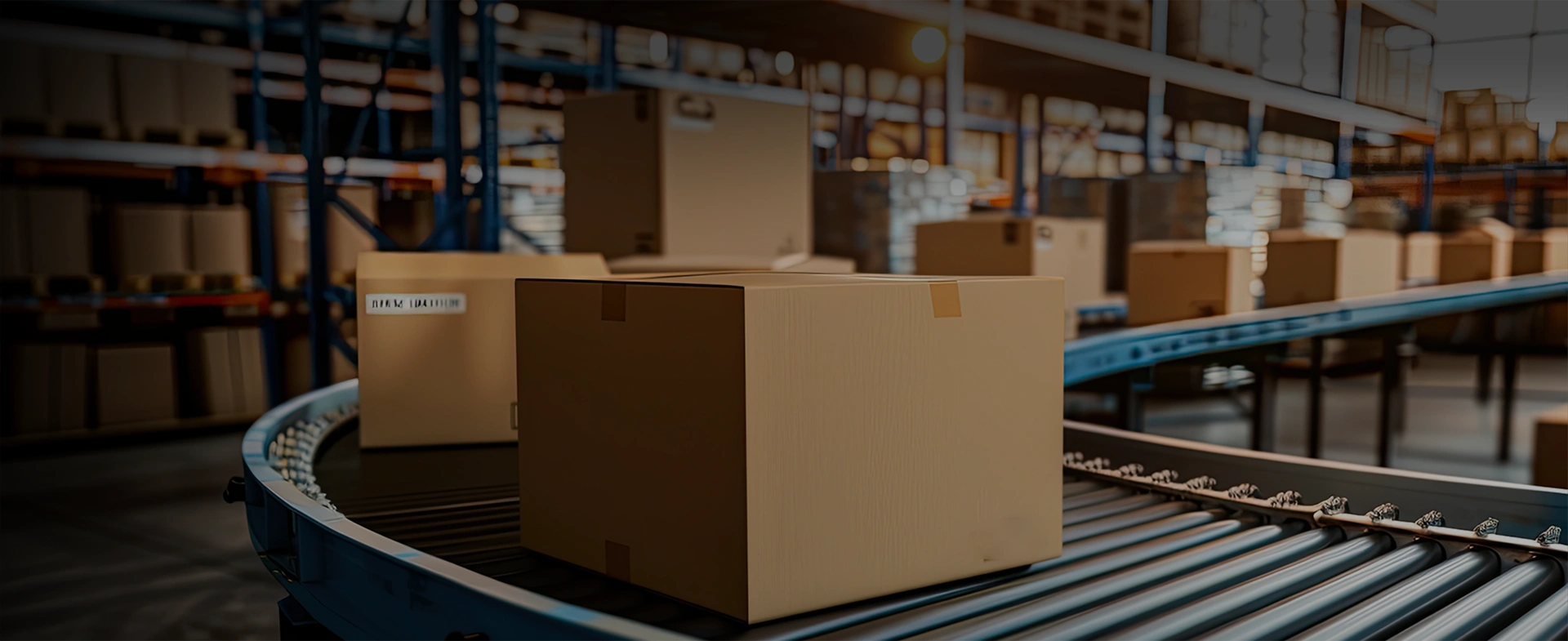

The operation of a carton sealer is very simple: open the carton, fill it, and close it. However, there are many different types of carton sealers. Below is a brief introduction to their classifications and features.
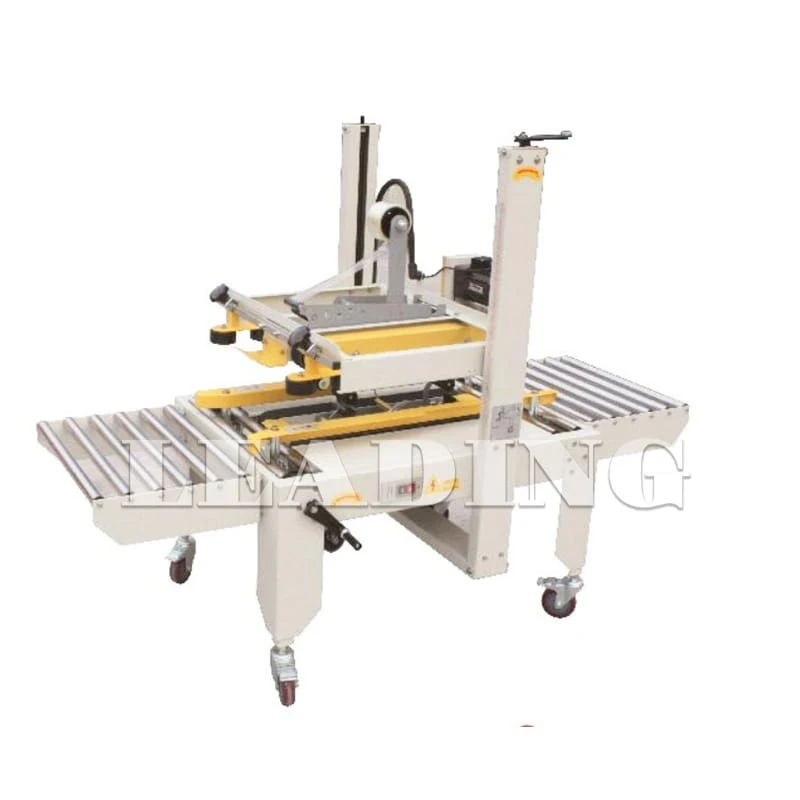
1) Based on how the packaged items are loaded into the carton: These can be classified as horizontal or vertical. Machines that push the packaged items horizontally into the carton are called horizontal models, while those that load them vertically are called vertical models. Currently, horizontal models are primarily used.
2) Based on the final sealing method: These can be classified as tongue-type, adhesive-type, hybrid-type, label-applied, expandable, self-locking, and others;
3) Based on the shape of the packaged items: These can be categorized as plate-shaped (e.g., blister packs), bottle-shaped (ampoules, vials), tube-shaped, and irregularly shaped;
4) Based on the specifications of the packaged items: These can be categorized as single-item, double-item, multi-item, and combination sets (e.g., 1 vial of antibiotic powder for injection + 1 ampoule of diluent);
5) Based on packaging speed, they can be classified into the following categories:
a) Low-to-medium speed models, with speeds of approximately 60–80 boxes per minute. These primarily use cam mechanisms, offering advantages such as compact structure, small size, strong adaptability, convenience, and high cost-effectiveness. Disadvantages include high impact force, difficulty in adjustment, and slow speed.
b) Medium-to-high-speed models, with speeds of approximately 80–120 boxes per minute. These primarily utilize a mechanical cam mechanism, offering relatively smooth operation, easy adjustment, and a wide range of applications. The disadvantage is that the forming and unfolding mechanisms for rotating paper boxes cannot adapt to changes in speed.
c) High-speed models, which primarily rely on mechanical continuous-operation mechanisms. The advantage is high speed; the disadvantages are limited applicability, strict requirements for packaging materials, and relatively low stability

TEL: 13969856723
WhatsApp: 13969856723
E-mail: sarah@bealead.com
Address: No.17 jinzhou road,Changfu District,Changshu city,Jiangsu Province,China
Copyright © 2025 by Bealead Machinery Co., LTD. All Rights Reserved Designed by HUISHANG MEDIA