
For e-commerce businesses, warehouses, and packaging manufacturers, choosing the right automatic bagging machine is essential for maintaining efficient operations. Insufficient packaging capacity can cause order backlogs, increase labor costs, and delay shipments. However, investing in an oversized machine may result in unnecessary expenses.
Understanding Automatic Bagging Machine Capacity helps businesses select equipment that matches their daily order volume, production schedule, and future growth requirements.
This guide explains how to calculate packaging demand, evaluate Bagging Machine Speed, and choose the right solution for high-volume e-commerce packaging and industrial applications.
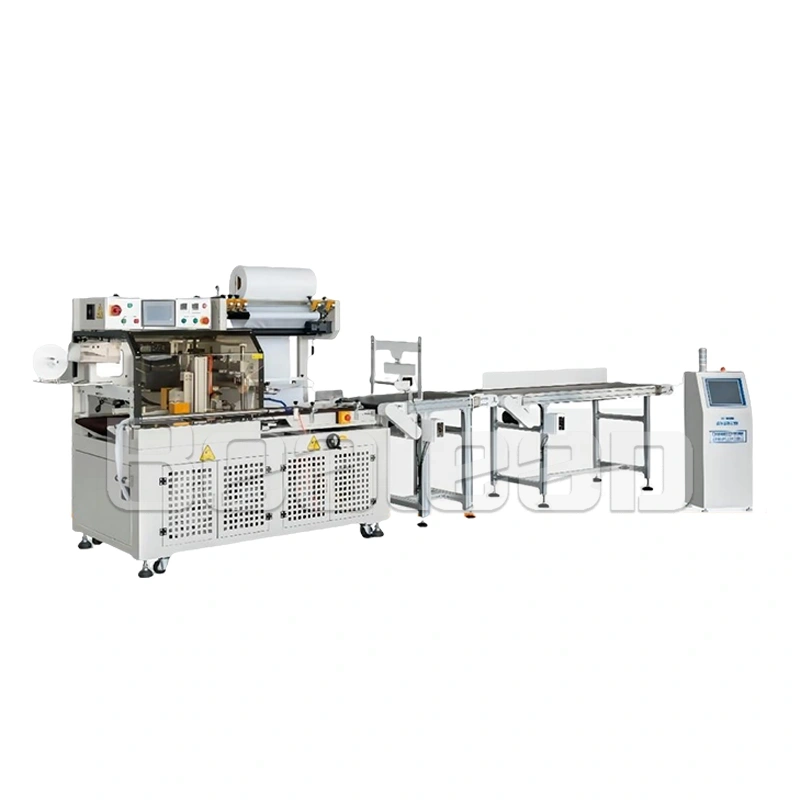
Automatic bagging machine capacity refers to the number of packages a machine can complete within a specific period. It is commonly measured in bags per minute, bags per hour, or packages per shift.
However, advertised machine speed does not always represent actual production output.
Three factors should be considered:
· Rated Speed: The maximum output specified by the manufacturer under defined operating conditions.
· Actual Throughput: The number of packages successfully completed during real production.
· Operational Efficiency: Overall performance after accounting for downtime, material changes, maintenance, and product handling.
For B2B buyers, actual throughput is more important than theoretical maximum speed. Before purchasing equipment, confirm the operating conditions used to calculate the manufacturer's capacity specifications.
The first step in selecting packaging equipment is understanding your daily order volume.
For example, suppose an e-commerce warehouse processes 4,000 orders per day and operates an 8-hour shift.
The basic calculation is:
Daily Orders ÷ Productive Working Hours = Required Orders Per Hour
4,000 ÷ 8 = 500 orders per hour.
This means the packaging operation must complete approximately 500 orders every hour.
However, actual productive time may be shorter because of breaks, machine adjustments, material replenishment, and maintenance.
If the available productive time is only 7 hours, the required output increases to approximately 572 orders per hour.
Businesses should also consider seasonal demand, promotional campaigns, and peak-hour order fluctuations.
A suitable machine should meet normal production requirements while providing enough capacity to handle temporary increases in demand.
After calculating daily packaging demand, buyers can determine the required Bagging Machine Speed.
The basic formula is:
Required Speed = Daily Packaging Volume ÷ Productive Operating Minutes
For example, a warehouse needs to package 4,000 orders within 420 productive minutes.
The required speed is approximately 9.5 packages per minute.
However, selecting a machine that operates continuously at exactly this speed leaves little room for unexpected downtime.
A capacity allowance of approximately 15–25% can provide additional flexibility, depending on operating conditions and future growth expectations.
In this example, buyers could evaluate equipment capable of sustaining approximately 11–12 packages per minute.
This is an illustrative calculation, not a universal equipment specification. Actual machine selection should be based on product testing and supplier-confirmed performance.
Machine speed is only one part of overall packaging efficiency. Several factors influence actual production output.
Product dimensions, weight, and shape affect feeding and positioning speed. Small, uniform products are generally easier to handle than bulky, irregular, or fragile items.
Provide suppliers with representative product samples before requesting equipment recommendations.
Different packaging materials and bag dimensions may require different feeding, sealing, and adjustment procedures.
Check whether the machine supports your required bag width, length, thickness, and material specifications.
Inconsistent manual feeding can prevent a high-speed machine from reaching its full capacity.
Conveyors, automatic feeding devices, and product positioning systems help maintain a continuous packaging workflow.
Businesses handling multiple SKUs may need frequent adjustments to bag sizes and machine settings.
Equipment with convenient adjustment procedures can reduce changeover time and improve overall productivity.
High packaging speed should not compromise sealing performance.
Poor seals, damaged bags, and incorrect packaging can result in rework and additional operating costs. Consistent packaging quality is essential for efficient operations.
Different businesses have different packaging requirements.
Small and Medium-Sized Businesses
Companies processing several hundred orders daily may prioritize affordable investment, flexible operation, and easy maintenance. Compact or semi-automatic equipment may be suitable depending on their production needs.
Growing E-commerce Businesses
Companies handling thousands of daily orders generally need more consistent output. Automatic bagging solutions can reduce repetitive manual work and improve packaging efficiency.
Integration with barcode scanners, label printers, and conveyor systems can further improve workflow.
Large Fulfillment Centers
High-volume warehouses and third-party logistics providers require reliable packaging systems capable of handling substantial order volumes.
For these operations, packaging capacity should be evaluated together with sorting, feeding, labeling, and shipping processes.
Multiple packaging stations or integrated production lines may provide greater flexibility and scalability.
The growth of online retail has increased demand for faster and more efficient packaging operations.
Unlike traditional manufacturing, e-commerce fulfillment centers often process different SKUs, product dimensions, and order quantities throughout the day.
A suitable High-Volume E-commerce Packaging solution should offer:
· Flexible packaging formats for different products.
· Consistent packaging output during peak periods.
· Integration with barcode scanning and label printing.
· Compatibility with conveyors and warehouse management systems.
· Expandable capacity to support future business growth.
Packaging automation helps reduce repetitive labor, improve operational consistency, and support faster order fulfillment.
For growing businesses, scalability should be an important consideration when evaluating equipment investment.
Choosing the right supplier is as important as selecting the correct machine capacity.
Before requesting a quotation, prepare the following information:
· Average and peak daily order volume.
· Required packages per hour.
· Product dimensions and weight range.
· Required bag sizes and packaging materials.
· Number of SKUs processed daily.
· Available production space and operating hours.
· Existing packaging and conveyor equipment.
· Expected production growth over the next three to five years.
Ask manufacturers whether their quoted speed represents maximum theoretical output or sustained production performance.
Where possible, request a machine demonstration using your actual products and packaging materials.
International buyers should also evaluate installation guidance, operator training, spare parts availability, warranty terms, and after-sales technical support.
Selecting the right equipment manufacturer is essential for achieving consistent packaging performance and long-term operational efficiency.
A reliable supplier should provide suitable machine configurations based on product dimensions, packaging materials, daily production volume, and automation requirements.
Before making a purchasing decision, buyers should evaluate the manufacturer's production experience, equipment customization capabilities, quality control procedures, and technical support.
It is also important to confirm machine specifications, installation requirements, spare parts availability, and after-sales service.
Working with an experienced packaging machinery manufacturer can help businesses reduce investment risks and build a more efficient packaging operation.
How do I calculate automatic bagging machine capacity?
Divide your daily packaging volume by actual productive operating minutes. Then account for downtime, changeovers, and expected production growth.
What is the difference between bags per minute and orders per hour?
Bags per minute measures machine output, while orders per hour measures completed customer orders. One order may require more than one package.
Is a higher-speed bagging machine always better?
No. The best machine is one that meets actual production requirements without unnecessary investment or operating costs.
What affects actual bagging machine speed?
Product dimensions, feeding consistency, packaging materials, sealing requirements, maintenance, and machine adjustments all influence actual output.
Should I choose one high-capacity machine or multiple smaller machines?
This depends on production volume, product variety, available space, and maintenance requirements. Multiple machines may provide greater flexibility, while one high-capacity system may simplify operations.
Choosing the right Automatic Bagging Machine Capacity requires more than comparing advertised machine speeds.
Businesses should evaluate daily order volume, calculate required Orders Per Hour, consider peak demand, and assess the factors affecting actual packaging throughput.
For e-commerce companies, warehouses, and packaging manufacturers, the right automation solution can improve productivity, reduce labor costs, and support long-term business growth.
Contact BINHAI to discuss your flexible packaging machinery requirements and explore suitable equipment solutions for your production needs.

TEL: 13969856723
WhatsApp: 13969856723
E-mail: sarah@bealead.com
Address: No.17 jinzhou road,Changfu District,Changshu city,Jiangsu Province,China
Copyright © 2025 by Bealead Machinery Co., LTD. All Rights Reserved Designed by HUISHANG MEDIA